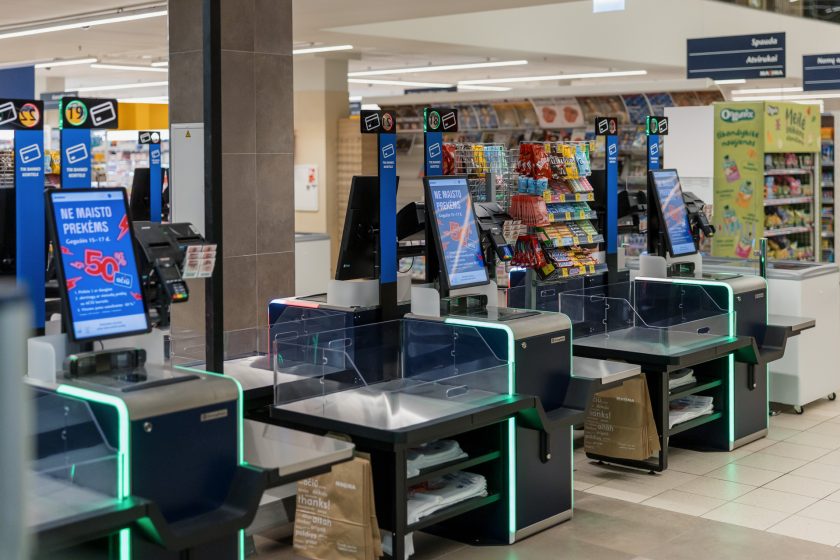
According to the 2026 ECR Retail Loss study, self-checkout has now overtaken traditional checkout lanes, with 54% of shoppers preferring to use SCOs. But the convenience comes with a trade-off: stores operating self-checkout continue to record slightly higher levels of shrink than those relying solely on staffed checkout lanes.
The study found that stores operating self-checkouts recorded losses 0.42 percentage points higher than comparable stores without self-service lanes. During the first 12 months following the introduction of self-checkout, average store losses increased by 0.26 percentage points.
The findings, however, paint a more nuanced picture than earlier industry concerns suggested. While self-checkout does create additional loss-prevention challenges, the gap is significantly smaller than the 1–2 percentage point increases previously associated with older-generation self-checkout systems, particularly those without effective weight-verification controls.
“The fact that self-checkout creates additional loss challenges is nothing new,” said Rokas Budvilaitis, CEO of retail technology company Neto Baltic. “The difference today is that SCO software and artificial intelligence have fundamentally changed what retailers can do about it. Many common loss scenarios can now be detected and prevented.”
Published in June, the 2026 ECR Retail Loss study analysed data from 39 retailers, including seven of the world’s largest retail chains by revenue. Together, the participating companies represent more than €1 trillion in annual turnover.
When Small Mistakes Add Up to Millions
According to the ECR research, retailers lose €229.89 for every 1,000 self-checkout transactions. For an average grocery store operating a self-checkout area, that translates into approximately €5,416 per month.
“Individually, those losses may appear manageable,” Budvilaitis said. “But across a national retail network with hundreds of locations, they can quickly become a seven-figure problem.”
The biggest contributor is also the most straightforward: products that never make it into the transaction.
The study found that between 10 and 48 out of every 1,000 self-checkout transactions involve items that are incorrectly scanned or not scanned at all.
Some cases are genuine customer mistakes. Shoppers may rush, overlook an item or unintentionally complete the scanning process incorrectly. Others involve deliberate attempts to bypass payment, such as imitating the scanning gesture and placing the item directly into the bagging area.
“These situations become particularly difficult to manage when retailers disable weight-based controls because of customer frustration or excessive interventions,” said Budvilaitis.
Modern computer vision technology is changing that equation. Rather than relying solely on weight verification, AI systems can analyse customer behaviour, detecting simulated scans and identifying products placed in the bagging area that do not correspond with the transaction.
Neto Baltic was the first company in the Baltics to introduce ScanWatch Retail Suite, an artificial intelligence solution developed jointly with technology company Agmis.
The platform is designed to address the most common self-checkout loss scenarios while automatically recognising unpackaged products such as fruit and bakery items. Launched in 2019, the solution is now protecting more than 5,000 self-checkouts worldwide.
Another common scenario involves customers leaving unpaid items in their shopping baskets. According to the ECR study, this occurs in two out of every 1,000 self-checkout transactions. After paying for scanned items, customers simply place the remaining unpaid products into their bags and leave the store.
“Basket monitoring and product counting across both the shopping basket and the bagging area provide an effective solution to this problem,” Budvilaitis explained. “If the system detects products left in the basket or identifies more items in the bagging area than were initially scanned, it can pause the transaction and alert a store employee.”
The Cost of Mistakes and the Price of Lost Time
Fresh produce, bakery items and other unpackaged goods remain among the most challenging categories in self-service environments. Unlike packaged products with barcodes, these items require customers to identify products manually through on-screen menus, creating opportunities for both accidental errors and intentional misuse.
The ECR study found that losses associated with unpackaged products occur in 20 out of every 1,000 self-checkout transactions when customers are required to select these items from a product list.
The causes vary widely. Some are simply the result of an imperfect user experience: a shopper selects a lime instead of a lemon because it appears first in the menu; chooses four identical bread rolls to save time despite having different varieties in the bag; or selects conventional tomatoes instead of organic ones because they are easier to locate.
Other cases involve deliberate attempts to exploit the system, ranging from minor product substitutions to more extreme examples, such as selecting onions when purchasing a Lego set.
“The financial impact of each individual incident is usually limited,” said Rokas Budvilaitis, CEO of Neto Baltic. “The larger challenge is the friction created by cumbersome product-selection interfaces and the time customers spend navigating them.”
According to Neto Baltic’s customer data, manually selecting a single unpackaged product takes approximately nine seconds. AI-powered product recognition reduces this process to around two seconds, essentially creating the same experience as scanning a barcoded item.
The benefits extend beyond loss prevention. Faster product recognition improves the customer experience, increases self-checkout throughput and helps retailers reduce congestion during peak shopping periods.
Barcode switching, where a customer replaces the barcode of a higher-value product with that of a cheaper item, is among the least frequent forms of self-checkout fraud. According to the ECR research, it occurs only 1.5 times per 10,000 transactions. Yet because these incidents are deliberate, their financial impact can be disproportionate to their frequency.
The most costly loss scenario identified by the study is also one of the simplest: customers leaving the store without paying for their purchases.
On average, this occurs once in every 1,000 self-checkout transactions, although one participating retailer recorded a rate as high as nine incidents per 1,000 transactions. Each incident results in an average loss of €88.
Neto Baltic’s experience in Lithuania suggests that some retailers may face significantly higher exposure. At one store, the company recorded three to five unpaid walkouts per week.
AI-powered monitoring can identify these incidents in real time and alert self-checkout attendants or store security personnel.
“Based both on the experience of retailers using ScanWatch Retail Suite and the findings of the study, we can confidently conclude that intelligent self-checkout protection solutions are delivering results. Nearly all participating retailers have either tested new technology-driven loss prevention solutions or introduced additional security processes for their SCO operations.
The market is increasingly recognising that weight-based controls alone are no longer sufficient. Retailers cannot surround every self-checkout area with physical barriers, nor can they assign a security employee to every SCO. Technology has caught up with those attempting to exploit self-checkout systems, and when new loss scenarios emerge, these solutions can be rapidly adapted to address them,” said Budvilaitis.
When Self-Checkout Stops Being Self-Service
The ECR study highlights another challenge facing retailers: too many transactions still require employee intervention, reducing the efficiency gains that self-service was designed to deliver.
One participating retailer reported that 10% of all self-checkout customers were unable to complete their purchase without staff assistance.
Interventions fall into two categories. Some are unavoidable, including age verification, payment system failures or the removal of security hard tags. Others, including weight database errors, malfunctioning scales and user interface-related mistakes, can be prevented.
“A 10% intervention rate is nothing to celebrate, but it is far from the worst we have encountered,” said Budvilaitis. “Some retailers report intervention rates approaching 20%, usually due to hardware or software limitations, or poorly configured weight-control systems.”
Every intervention reduces the throughput of the self-checkout area. During peak periods, a single employee may need to resolve issues across multiple SCOs simultaneously, limiting capacity and increasing customer waiting times.
“A significant number of interventions can be avoided through the use of a self-learning central weight database. Age verification can be performed using artificial intelligence or remotely through assisted-service stations. We are also testing self-checkout solutions where customers can remove security hard tags themselves after completing payment. The avoidable intervention rate should not exceed 5%; our target is typically 2% to 3%.”
Even small user interface improvements can have a meaningful impact.
The ECR study highlights that customers are often willing to correct their own mistakes rather than wait for staff assistance. For example, when a customer selects an incorrect product from the menu, the system can display a simple confirmation prompt: “Are you sure you intended to select this item?”
Data from two participating retailers showed that such correction messages appeared for 30 out of every 1,000 customers. Between 80% and 97% of those customers corrected the mistake themselves.
About the ECR Retail Loss Group
The ECR Retail Loss Group brings together representatives from some of the world’s largest retail organisations, retail technology and equipment providers, and members of the academic community specialising in retail research.
Recognised as one of the world’s leading loss prevention organisations, the group provides a platform for retailers to share real-world operational challenges, exchange industry experience and collaborate on practical solutions.
The research published by the group is based on actual retail data, the latest real-world performance metrics and insights from professionals working across the industry.
The previous ECR Retail Loss study examining self-checkout operations was conducted in 2018.